

October 14, 2021: The tropical Andes are likely the richest of the world’s tropical regions when referring to Myxomycetes. Despite being a biodiversity hotspot for these amoeboid protists, it has been widely underexplored so far. To tackle this situation, we have conducted studies on the myxobiota of highlands of the Peruvian Andes. Part of these studies, recently published in Phytotaxa, have revealed the occurrence of three unusual species of the order Trichiales, at altitudes as high as 5000 m. Two of them have been reported for the first time from the Southern Hemisphere, enlarging their known geographical distribution, and their ecological data. These results not only highlight the potential of tropical Andes as a suitable habitat for rare myxomycetes, but also emphasize the value of exploratory studies to get to know the real biodiversity in neglected regions.
More News

A beautiful testate ameba for a great Scientist.
February 23, 2022: A new species of testate amoebae, a group or free-living protists that build characteristic shells, has [...]

New year, new sampling trip (to the amazing Salares of Chile)
January 19, 2022: To get off with a good start for the New Year, several members of the Myxotropic [...]

What a welcoming month!
December 1, 2021: This month we are very glad to welcome Giulia Magri Ribeiro, a predoctoral student from the [...]
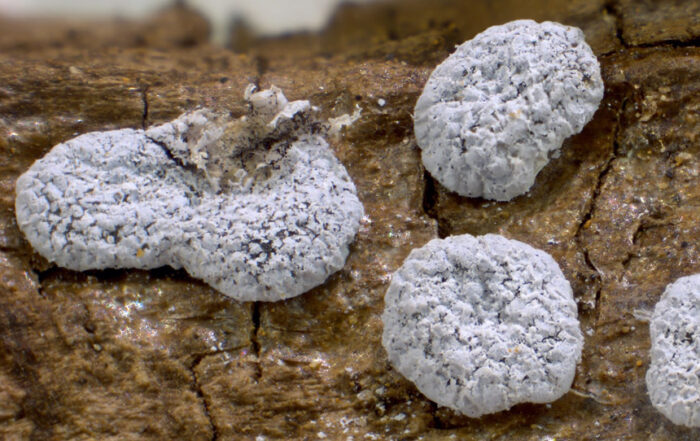
Members of the Myxotropic project describe a misidentified nivicolous species: the importance of combining morphological and molecular data.
December 1, 2021: A new nivicolous myxomycete species, Didymium pseudonivicola, has just been described as result of a comprehensive [...]