
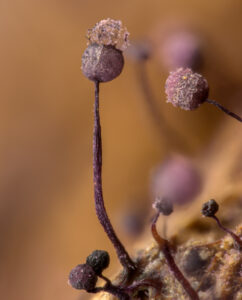
November 18, 2025: We have published a new article in IMA Fungus about one of the least known groups of Myxomycetes: the order Cribrariales.
Thanks to the analysis of two key genes, nrSSU and mtSSU, we have made several important taxonomic changes, rewriting part of the evolutionary tree of these organisms.
Key changes:
Genus merger: Lindbladia is no longer an independent genus as it appeared nested within Cribraria.
Cribraria reorganization: this genus has been reorganized into three subgenera, including the definition of a new one.
Enteridium relocation: we have confirmed that Enteridium is not part of Cribrariales, but belongs to another order: Trichiales.
We continue to take firm steps towards a natural systematics of Myxomycetes to better understand the evolution of these surprising organisms.
More News

A beautiful testate ameba for a great Scientist.
February 23, 2022: A new species of testate amoebae, a group or free-living protists that build characteristic shells, has [...]

New year, new sampling trip (to the amazing Salares of Chile)
January 19, 2022: To get off with a good start for the New Year, several members of the Myxotropic [...]

What a welcoming month!
December 1, 2021: This month we are very glad to welcome Giulia Magri Ribeiro, a predoctoral student from the [...]
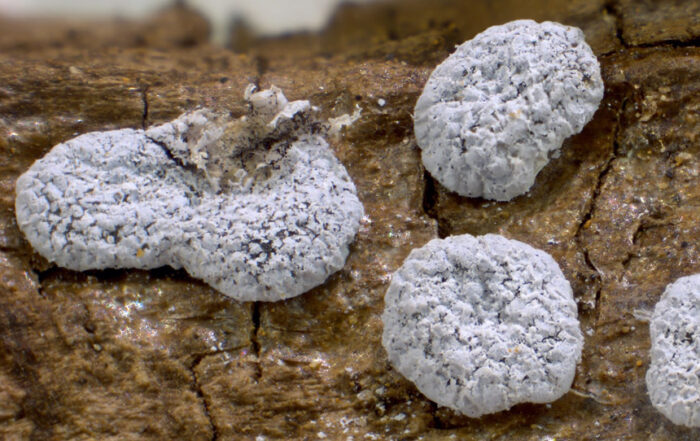
Members of the Myxotropic project describe a misidentified nivicolous species: the importance of combining morphological and molecular data.
December 1, 2021: A new nivicolous myxomycete species, Didymium pseudonivicola, has just been described as result of a comprehensive [...]