
 April 1, 2015: Ronikier and Lado’s new article on nivicolous Stemonitales has just come out in Mycologia. This fine-scale analysis demonstrates the existence of a high intraspecific morphological variability, possibly related to isolation and independent evolutionary processes among remote populations, in most of the studied species. However, a few of them show a uniform morphology that indicates that long-distance dispersal is an effective mechanism, although not as universal as usually assumed. You can check it out by clicking here.
More News

A beautiful testate ameba for a great Scientist.
February 23, 2022: A new species of testate amoebae, a group or free-living protists that build characteristic shells, has [...]

New year, new sampling trip (to the amazing Salares of Chile)
January 19, 2022: To get off with a good start for the New Year, several members of the Myxotropic [...]

What a welcoming month!
December 1, 2021: This month we are very glad to welcome Giulia Magri Ribeiro, a predoctoral student from the [...]
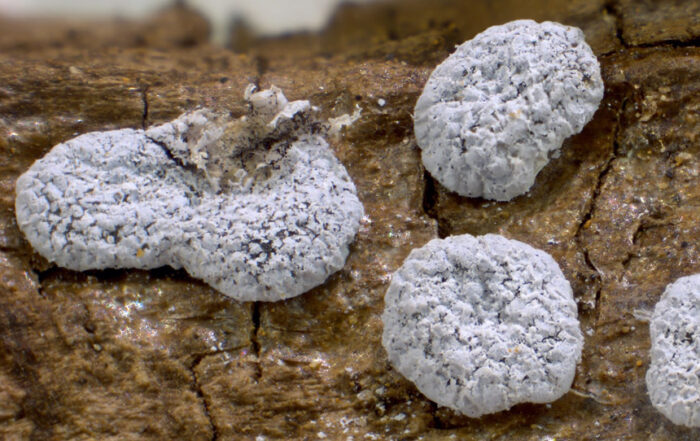
Members of the Myxotropic project describe a misidentified nivicolous species: the importance of combining morphological and molecular data.
December 1, 2021: A new nivicolous myxomycete species, Didymium pseudonivicola, has just been described as result of a comprehensive [...]